
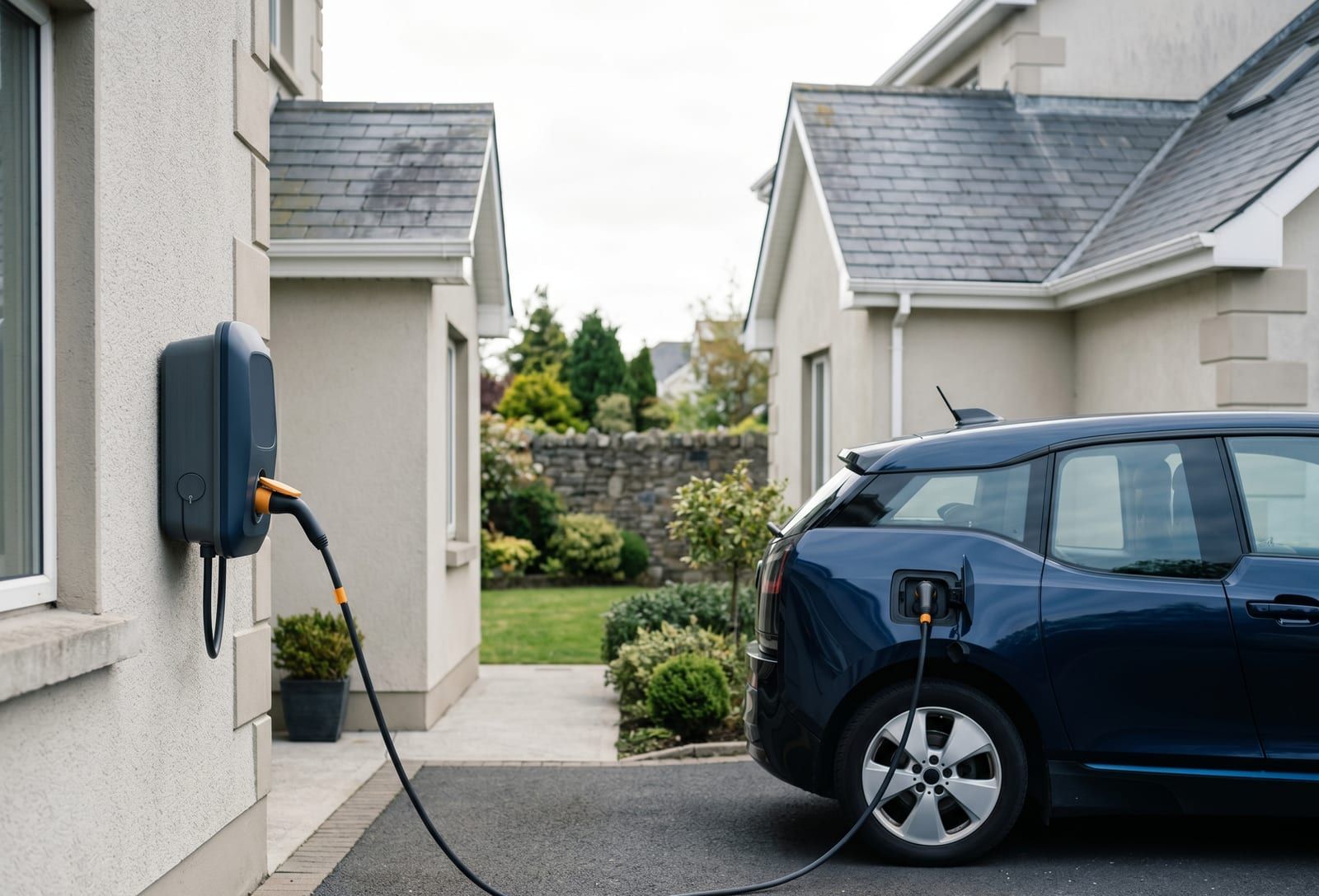
It’s a reasonable question. EV chargers look simple enough — a box on the wall and a cable to your car. So do you really need an electrician to fit one, or can you (or a handy friend) do it yourself? In Ireland, the short answer is: yes, you need a qualified electrician — and a Safe Electric registered one if you want the grant. Here’s why.
A home charger is a serious electrical load
An EV charger isn’t like plugging in a kettle. It draws a significant, sustained current for hours at a time. To do that safely it needs:
- A dedicated circuit run from your consumer unit, sized correctly
- The right protective devices (including specific RCD protection for EV charging)
- An assessment of your existing supply and fuse board to make sure they can handle it
Get any of that wrong and you risk overheating, nuisance tripping, or — worst case — a fire. This is exactly the kind of work that should only be done by someone qualified.
The legal and safety side
In Ireland, fixed electrical installation work should be carried out by a competent, Safe Electric registered electrical contractor and certified. That certificate is your proof the work was done safely and to standard — and it’s something your insurer or a future buyer may ask about. A DIY or uncertified install can invalidate insurance and is simply not worth the risk where your home and family are concerned.
The SEAI grant requires a registered installer
If you want the SEAI home charger grant (currently €300 — always check the latest figure on seai.ie), it’s not optional:
- The charger must be installed by a Safe Electric registered electrician, and
- The electrician must submit the completion certificate to Safe Electric so SEAI can verify it before paying.
So even on cost grounds, using a registered installer pays for itself — you can’t claim the grant without one.
What’s actually involved in a proper install?
When we install a home charger, the job typically includes:
- A site assessment — checking your supply, consumer unit and where the charger and car will sit
- Honest advice on the right charger for your car, home and budget (we’re not tied to one brand)
- A dedicated, protected circuit installed to standard
- A tidy finish — cables run neatly, not draped across the wall
- Full certification and SEAI grant paperwork support
Most installs are completed in a few hours, depending on the distance from your fuse board and any upgrades needed.
”Can I just use the granny cable?”
Most EVs come with a portable “granny” charger that plugs into a standard socket. It works in a pinch, but it’s slow, and a standard domestic socket isn’t designed for the sustained load of regular EV charging — which can cause the socket to overheat over time. A proper wall-mounted charger on a dedicated circuit is faster, safer and far more convenient for everyday use.
The bottom line
Could someone technically wire in a charger themselves? Maybe. Should they? No. It’s a safety-critical installation, it needs to be certified, and you forfeit the SEAI grant without a registered installer. The small saving isn’t worth the risk.
If you’re in Carlow or the South-East and thinking about a home charger, see our EV charger service or get a free quote. We’ll check your eligibility for the grant and handle the whole thing properly.