
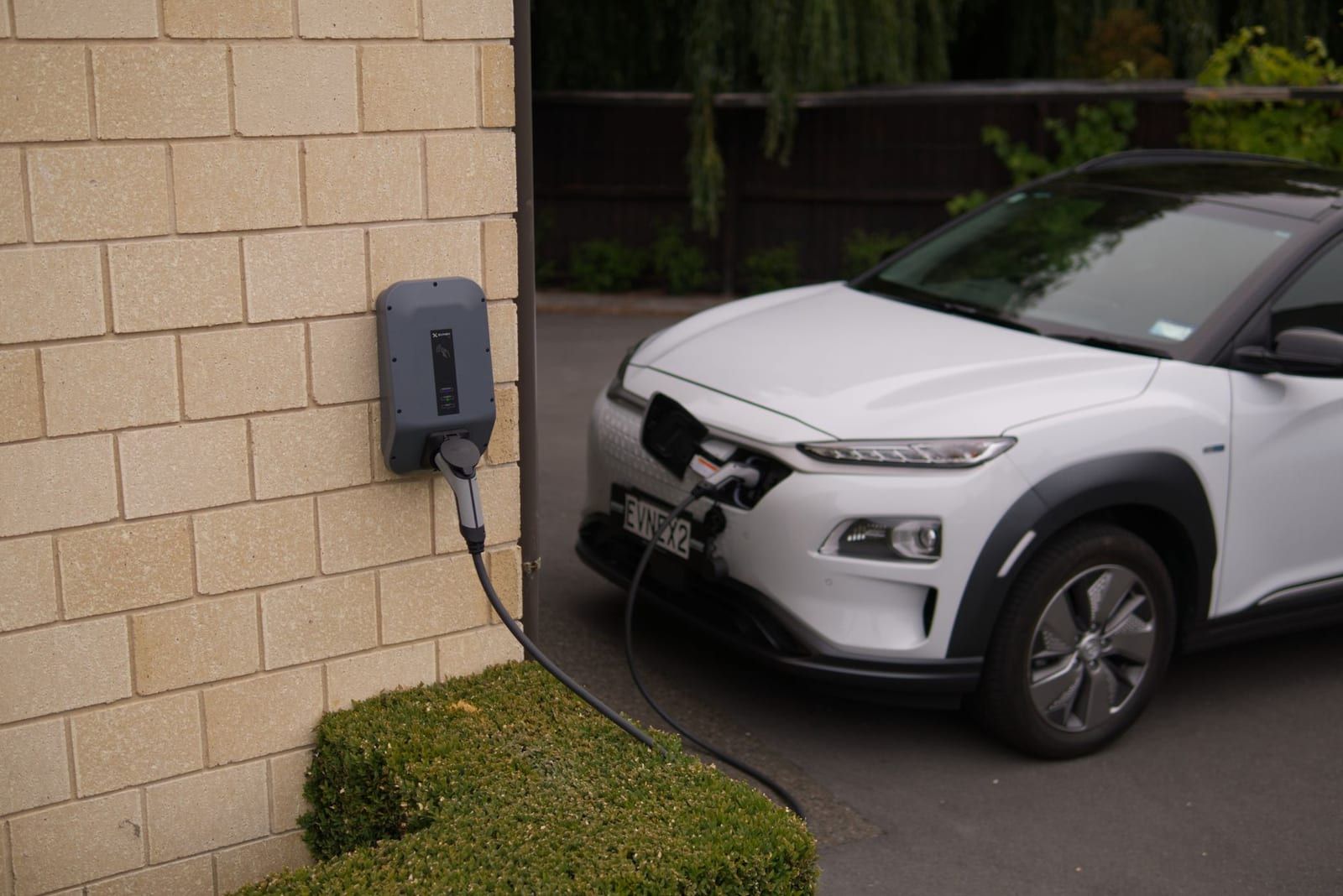
One of the biggest reasons people switch to an electric car is cheaper “fuel” — but how much you actually save depends a lot on where you charge. Here’s how home and public charging compare in Ireland, in plain numbers.
Electricity prices and public-charging tariffs change over time, so treat the figures below as illustrative. The principle, though, doesn’t change: home charging — especially on a night rate — is consistently the cheapest way to run an EV.
The big lever: a night-rate tariff
Most Irish electricity suppliers offer day/night or EV-specific tariffs, where overnight electricity is far cheaper than the daytime rate. Because your car sits on the driveway all night anyway, a home charger lets you fill up almost entirely on that cheap night-rate power — which is where the real savings come from.
A simple example
Say your EV uses roughly 0.18 kWh per km (a typical figure), and a full “tank” is around 50 kWh for ~280 km of range.
- Home, night rate: at a cheap overnight unit price, that 50 kWh might cost only a few euro — often the equivalent of a small fraction of what petrol or diesel would cost for the same distance.
- Home, day rate: still cheaper than fossil fuel, but you’re leaving money on the table versus charging overnight.
- Public fast charger: convenient on long trips, but the per-kWh price is typically several times the home night rate — so relying on public charging wipes out much of the saving.
The takeaway: do the bulk of your charging at home, overnight, and use public chargers mainly for top-ups on longer journeys.
Why home charging wins (beyond cost)
- Convenience — you wake up to a “full tank” every morning; no detours to a charge point.
- Speed — a proper home charger is far faster than a standard socket, and you’re not competing for a public bay.
- Battery-friendly — slower home (AC) charging is gentler on the battery than frequent rapid charging.
The SEAI grant softens the upfront cost
Homeowners may qualify for an SEAI home charger grant (currently €300 — always check the latest figure on seai.ie), which reduces the installation cost. The charger then pays for itself over time through the savings versus public charging and fossil fuel.
Getting set up
To charge cheaply and safely at home you need a properly installed, dedicated charger on its own protected circuit — not a granny cable trickling through a standard socket. As SEAI-approved EV charger installers, we fit home chargers across Carlow and the South-East, handle the grant paperwork, and certify the install.
Thinking about it? See our EV charger service or get a free quote and we’ll talk you through the charger and tariff that suit you.